
Unraveling the Mechanics Behind Revolving Doors: A Journey Through Ingenious Design
Introduction
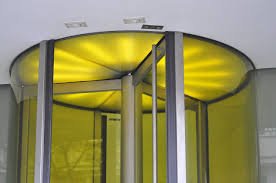
Revolving doors, a ubiquitous feature in modern buildings, are marvels of engineering that combine elegance with efficiency. This article explores the intricate mechanisms that drive these doors, shedding light on their design, functionality, and the ingenuity behind their operation.
The Mechanics of Movement
Core Components
At the heart of every revolving door are its core components: wings (or leaves), a central shaft, and a series of ceiling and floor bearings. These parts work in unison to ensure smooth and continuous rotation.
Rotation and Balance
The rotational movement of a revolving door is a harmonious blend of physics and engineering. The balance between the door's weight and its pivot points ensures a seamless motion, requiring minimal effort from users.
Design Innovations
Safety Features
Modern revolving doors incorporate advanced safety features, including speed control mechanisms and emergency stop systems. These innovations are vital in ensuring the safety of users, especially in high-traffic areas.
Integration with Building Aesthetics
Revolving doors are not just functional; they are an extension of a building's aesthetic. Contemporary designs offer a range of materials and styles, allowing architects to integrate these doors seamlessly into the building's façade.
Environmental Impact and Efficiency
Energy Conservation
One of the most significant advantages of revolving doors is their ability to conserve energy. By minimizing air exchange between the inside and outside, these doors reduce heating and cooling losses, contributing to a building's overall energy efficiency.
Reducing Air Infiltration
Revolving doors are instrumental in reducing air infiltration, a critical factor in maintaining indoor air quality and temperature control.
The Future of Revolving Door Mechanisms
Technological Integration
The future of revolving door mechanisms lies in the integration of technology. Smart doors, equipped with sensors and automated systems, are set to redefine the efficiency and functionality of these entrances.
Sustainable Designs
Sustainability is at the forefront of future revolving door designs, with an emphasis on using eco-friendly materials and further enhancing energy conservation features.
Conclusion
The revolving door mechanism, a blend of art and science, continues to evolve, meeting the challenges of modern architecture and environmental sustainability. Its ingenious design is a testament to human creativity and our relentless pursuit of efficiency and elegance in building design.
Diğer yazılar

Dorma Fotoselli Kapı: Güvenilir ve Modern Otomatik Kapı Sistemleri
Dorma Fotoselli Kapı: Güvenilir ve Modern Otomatik Kapı Sistemleri
Devamını oku
Door Parts Reliable Solutions for Automatic Doors and Window Hardware
Quality door parts support smooth operation, dependable access, and practical maintenance. From automatic sliding doors to everyda…
Devamını oku
Dorma DK Tech 120 Kayar Kapı Mekanizması
Dorma DK Tech 120 Teknik Özellikleri Aşağıdaki değerler üreticinin resmi ürün sayfasında belirtilen teknik verilerdir: Bu teknik d…
Devamını oku